When shopping for premium steak or walking into a restaurant, you’ll see two of the most expensive cuts: beef tenderloin and filet mignon. They’re both famous for their tenderness, high price, and steakhouse reputation and many people assume they’re the same thing — but they’re not exactly the same cut.
Beef tenderloin and filet mignon come from the same part of the cow. Tenderloin is the entire long muscle, while filet mignon is a small steak cut from the narrow end of the tenderloin.
Think of it like this: Beef tenderloin is the tenderest part of the cow and filet mignon is the tenderest part of the tenderloin.
Although both are prized for their tenderness, they differ in size, cooking methods, and price. Understanding the difference helps you choose the right cut for roasting, grilling, or preparing an impressive steak dinner.
Understanding beef cuts (Primal vs Sub-Primal):
Before we get into the differences between beef tenderloin and filet mignon. First let’s discuss foundational understanding of beef. The first cuts made into beef cattle are called primal cuts and there is a total of 8 of them: chuck, rib, loin, plate, shank, round, flank and brisket.

Sub-primal cuts are smaller sections broken down from a primal cut. We get our individual cuts of beef like the tenderloin, rib-eyes, brisket and flank steaks from sub-primal cut.
What is Beef Tenderloin?
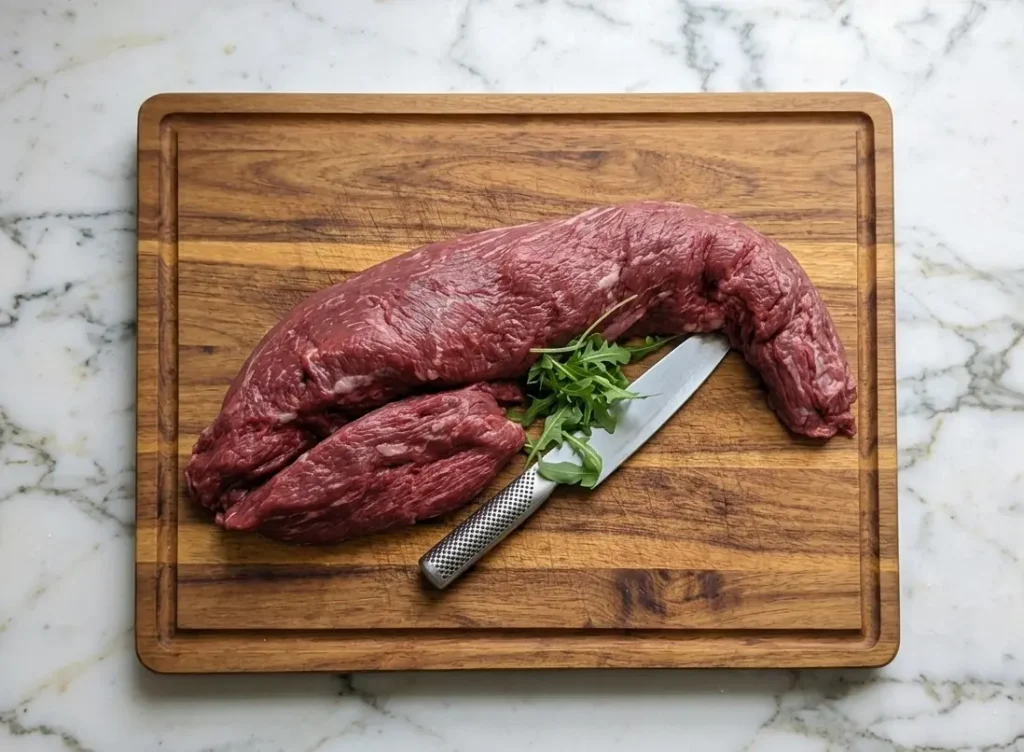
Beef tenderloin is a long, narrow muscle that runs along the inside of the cow’s spine, extending from the short loin to the sirloin. Because this muscle doesn’t get much exercise during the animal’s life, it develops very little connective tissue, which makes it incredibly tender.
A whole beef tenderloin is typically 18–24 inches long and weighs about 4–6 pounds. It’s one of the most prized cuts of beef because of its fine texture and buttery tenderness. Because of its cylindrical shape, it cooks evenly. So, it has become the preferred cut of beef for beef wellington. Roasting and grilling are also popular options for cooking tenderloin.
How butchers break down tenderloin:
Tenderloin is butchered into 3 parts. The tip is cut to make fillet mignon; the centre piece is called chateaubriand which is the preferred meat for beef wellington and roasting. And the end piece which is called butt tenderloin mostly used to make stew.
It is my ideal cut of beef for large gatherings as it can be sliced into nicely sized steaks.
What is Filet Mignon?
The literal meaning of filet mignon is small cut of meat, as it is only one to two and a half inch thick. And it is the tenderest part of the whole animal. This is the reason it is mostly reserved for special occasions.
Filet mignon comes from the very tip of the tenderloin. A lot of people think that whole tenderloin is cut into small two-inch steaks and those are all filet mignons (you won’t believe how much that happens in restaurants) but that’s not the case. Filet mignon is the one-to-two-and-a-half-inch piece of meat cut from the tip of the tenderloin.
The tenderloin doesn’t have much marbling or connective tissue, and the filet mignon has the least amount of connective tissue in the whole tenderloin which makes it the tenderest part of the whole cow often hailed as the king of steaks.
It has a very mild flavour compared to more heavily marbled steaks, but filet mignon is prized for its exceptionally soft texture. The phrase cut with the fork was made for this steak.
Where These Cuts Come from on the Cow?
These cuts come from the loin and sirloin sections from the back of the cow. It is nestled between the ribs right underneath the rear spine.
Which One Is Better? (Which One Should You Buy?)
When people ask whether tenderloin or filet mignon is better, the honest answer is that they serve different purposes.
If you’re cooking for several people or planning a holiday meal, a whole tenderloin makes an incredible centrepiece. Roasting the entire cut allows you to carve thick slices for each guest, and the presentation alone makes it feel like a special occasion.
Filet mignon, on the other hand, is perfect for individual steak dinners. Because each steak is already portioned, it’s easy to cook and plate. It’s also one of the most popular steaks at high-end restaurants because of its buttery texture.
So, the better choice really depends on what you’re cooking and how many people you’re feeding and what your budget is.
Why Filet Mignon Is So Expensive?
Both tenderloin and filet mignon are expensive cuts of beef, but filet mignon often carries the highest price per pound.
The main reason is simply supply. Each cow only has two tenderloins, and the section that produces filet mignon is relatively small (as compared to a total of 14 tomahawk steaks or 12 to 16 New York strip steaks we get from one cow).
By the time a butcher trims the tenderloin and slices it into individual steaks, only a handful of true filet mignon portions remain. That limited supply, combined with the steak’s reputation for tenderness, is what drives the price so high.
Interestingly, buying a whole tenderloin can sometimes be a better value than purchasing individual filet mignon steaks. Many home cooks will buy the entire cut and slice their own steaks, which can save a surprising amount of money.
Cooking Tenderloin vs Filet Mignon:
Because of the size difference, these cuts are usually cooked in different ways.
A whole tenderloin is typically roasted in the oven. I like to tie the roast with kitchen twine first, so it cooks evenly, then roast it until it reaches about 125°F internally before resting.
Filet mignon is usually cooked much faster. It works great in a hot cast iron skillet or on a grill. One trick I use when cooking filet mignon is finishing the steak with butter and fresh herbs during the last minute of cooking. Since the meat is lean, that little bit of fat adds a lot of flavour.
No matter which cut you’re cooking, the biggest mistake is overcooking it. Tenderloin meat shines when it’s still juicy and slightly pink in the centre.
Final Thoughts:
Both beef tenderloin and filet mignon come from the same part of the cow, but they’re used in different ways.
Tenderloin refers to the whole cut of meat, which can be roasted or sliced into steaks. Filet mignon is a smaller steak cut from the tenderloin’s tapered end and is prized for its incredible tenderness.
If you’re cooking for a crowd, a whole tenderloin makes a beautiful centrepiece. But if you’re looking for one of the most tender steaks you can put on a grill, filet mignon is tough to beat.
Once you understand how the two cuts relate to each other, picking the right one at the butcher shop becomes a lot easier.
FAQs About Tenderloin and Filet Mignon:
Is filet mignon the same as tenderloin?
Not exactly. Filet mignon is a small steak cut from the narrow end of the beef tenderloin, while tenderloin refers to the entire muscle. So, every filet mignon comes from the tenderloin, but most of the tenderloin isn’t filet mignon.
Is filet mignon the most tender steak?
Yes, it’s generally considered the most tender steak on the cow. The muscle it comes from barely gets used, which keeps the meat extremely soft. The trade off is that it’s leaner, so the flavour is milder than something like ribeye.
Can you cut filet mignon from tenderloin?
You can, and that’s actually where filet mignon comes from. When you buy a whole tenderloin, the small, tapered end is what gets sliced into filet mignon steaks. Many people buy the whole cut and portion their own steaks at home.
How many filets are in a tenderloin?
It depends on the size of the tenderloin and how thick you cut the steaks. In most cases, you’ll get around 6 to 12 filet mignon steaks if you cut the whole tenderloin into steaks. The thicker you cut them, the fewer you’ll get.
Which one is better for grilling?
Filet mignon is usually the better choice for grilling because it’s already portioned into individual steaks. A whole tenderloin is better suited for roasting or slicing into steaks first. Once it’s cut into steaks though, tenderloin grills just as well.
Which is more expensive?
Filet mignon is usually more expensive per pound. Only a small part of the tenderloin becomes filet steaks, which makes them more limited. Buying a whole tenderloin and cutting it yourself is often cheaper.
Why is filet mignon wrapped in bacon?
Filet mignon is a very lean steak, so some steakhouses wrap it in bacon to add extra fat and flavour while it cooks. The bacon also helps keep the steak moist and prevents the outside from drying out. It’s not required, but it’s a common trick to make a lean steak taste richer.
Why does filet mignon have less flavour than other steaks?
Filet mignon is extremely tender, but it doesn’t have as much marbling as steaks like ribeye or strip steak. Fat carries a lot of the beefy flavour, so leaner cuts tend to taste milder. That’s why filet mignon is often cooked with butter, herbs, or sauces.
Can you cook tenderloin steaks like filet mignon?
Yes, because filet mignon is technically just a steak cut from the tenderloin. If you slice a tenderloin into thick medallions, you can cook them exactly the same way you’d cook filet mignon. A hot skillet or grill and a simple seasoning of salt and pepper is usually all you need.